Fotona 4D Laser Facial (TimeWalker) Encino, CA: A Smart Choice for Preventive Aging Care
Preventive aging care works best when it starts before the face looks dramatically different. That is the real appeal of the Fotona 4D Laser Facial, especially the TimeWalker approach. It is not about chasing a severe problem after years of collagen loss, etched lines, and laxity. It is about intervening early, improving skin quality steadily, and preserving the features that already look like you.
That distinction matters. Many patients in Encino are not asking for a complete transformation. They are asking for fresher skin, tighter contours, less creasing around the mouth and eyes, and a smoother texture that still reads as natural. They want to look well rested, not altered. They want to age with intention, not denial. In that setting, Fotona 4D has earned attention for good reason.
The treatment blends multiple laser modes into one session, addressing the skin from inside the mouth as well as the surface. That combination is unusual. It lets providers target deeper support, superficial texture, and overall brightness without surgery and with far less downtime than a facelift or deeper ablative resurfacing. For the right patient, it lands in a very useful middle ground, more meaningful than a basic facial, less disruptive than a major procedure.
In a place like Encino, where work calendars, social obligations, and outdoor living all shape treatment decisions, that middle ground is often exactly what people need.
Why preventive aging care deserves more respect
A lot of cosmetic medicine still gets framed around repair. Someone notices jowling, deeper marionette lines, crepey skin under the eyes, or lipstick lines that are suddenly hard to conceal. Then comes the question of how to fix it. There is nothing wrong with repair, but it is usually more demanding, more expensive, and slower than maintenance.
Preventive care is less dramatic, but in practice it often produces the most elegant long term result. The goal is to stimulate collagen while the skin still has healthy function. You preserve elasticity instead of trying to rebuild it after a steep decline. You soften early movement lines before they become static. You support tone and texture before the contrast between face, neck, and chest becomes obvious.
That is where the Fotona 4D Laser Facial (TimeWalker) Encino, CA conversation makes sense. It appeals to patients in their late 20s, 30s, 40s, and even early 50s who are noticing change, but are not ready for aggressive intervention. Sometimes the first clue is makeup settling around the mouth. Sometimes it is a little laxity under the jawline in certain lighting. Sometimes it is simply that the skin no longer reflects light the way it used to.
Those are subtle complaints, but they are not trivial. They are often the earliest signs that collagen support and cell turnover are slowing down.
What Fotona 4D actually is
Fotona 4D is a layered laser rejuvenation treatment built around four distinct modes, each designed to target a different aspect of facial aging. The exact naming and sequence can vary slightly depending on the provider’s protocol and whether they are emphasizing the TimeWalker platform, but the central concept stays consistent. One pass addresses internal tissue support, another works on deeper tightening, another targets pigmentation and textural irregularities, and another polishes the surface.
What makes it stand out is the inside out strategy. One component is performed intraorally, meaning the laser handpiece treats tissue from inside the mouth to heat and tighten the area around the nasolabial folds and lower face without needles or incisions. That surprises many first time patients, but it is one of the reasons the treatment can create a more comprehensive effect than a surface only procedure.
The remaining steps focus on the external skin. Depending on skin needs, a session may improve fine lines, pore appearance, mild laxity, uneven texture, early pigmentation changes, and general dullness. It is not a substitute for surgery in a patient with advanced sagging, but that is not what it was designed to be. It is much better understood as a collagen banking strategy with visible aesthetic benefits.
TimeWalker branding often emphasizes the idea of graceful, staged rejuvenation rather than a single aggressive event. That philosophy aligns very well with preventive care. The best results usually come from a thoughtful series and maintenance plan, not a one time treatment followed by neglect.
Why Encino patients often gravitate toward it
Encino has a patient population that tends to be informed, selective, and schedule conscious. People want results, but they also want treatments that fit into normal life. Few can disappear for weeks of recovery. Fewer still want a visible “procedure look” that draws attention before they are ready to discuss what they had done.
Fotona 4D fits this environment because it can produce a meaningful refresh with relatively manageable downtime. Redness and swelling can happen, and some surface roughness is common depending on settings, but many patients find it easier to plan around than deeper ablative procedures. For professionals on camera, parents with no appetite for extended recovery, and patients who value subtle progression, that matters.
Climate is another practical factor. Southern California sun exposure ages skin steadily. Even diligent sunscreen users collect some degree of pigment irregularity, textural change, and collagen breakdown over time. Treatments that improve skin quality OMNIA Wellness Center Fotona 4D Laser Facial (TimeWalker) Encino, CA while encouraging repair tend to be especially relevant here. The caveat, of course, is that laser care only works well when paired with strong sun protection after treatment. A patient who invests in laser sessions and then returns to inconsistent SPF habits is working against their own result.
What the treatment feels like in real life
Descriptions online are often too vague to be useful. Patients deserve a more realistic picture.
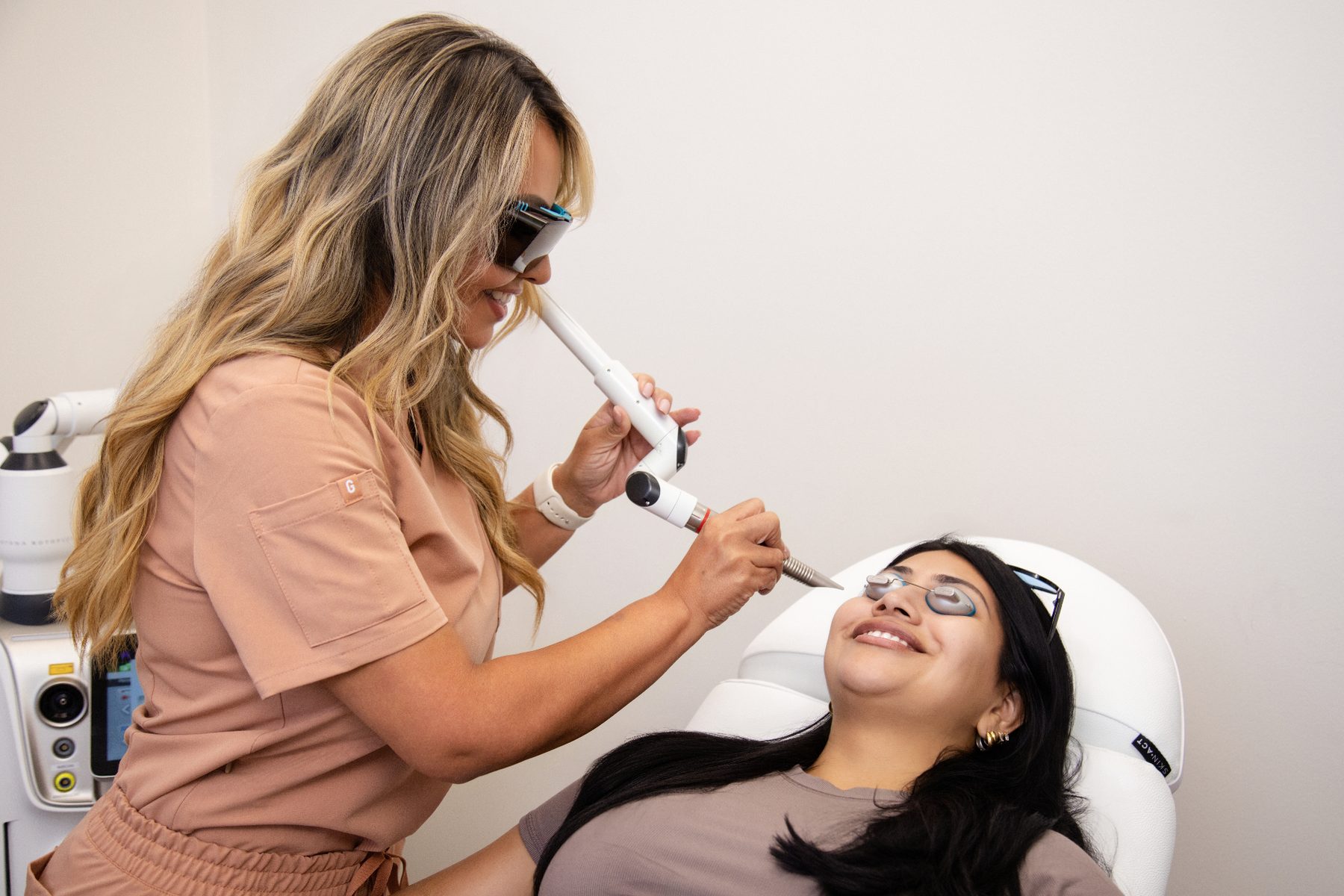
A typical appointment begins with cleansing, photography, and a review of current skin status. If the treatment includes the intraoral step, that portion often feels warm and strange rather than truly painful. Most people are more surprised by the sensation than distressed by it. External passes vary. Some feel prickly heat, some feel more like quick rubber band snaps, and some areas are easier than others. The upper lip, around the nose, and bony parts of the face tend to feel more intense.
Comfort depends on settings, the provider’s technique, and the patient’s own tolerance. Numbing may be used in some offices, especially if a more resurfacing focused endpoint is planned. The session length can range widely, but many appointments fall somewhere around 45 to 90 minutes.
Afterward, the skin may look flushed, feel warm, and show mild swelling. If a lighter protocol is used, that may settle quickly. If more surface resurfacing is incorporated, the skin can feel rough or bronzed for several days before revealing a smoother finish. Most patients can return to normal activities fairly quickly, but “quickly” does not mean instantly camera ready for everyone. I usually tell people not to book this right before a wedding, major presentation, or photo shoot unless their provider has specifically planned a very conservative treatment.
The difference between preventive and corrective use
One of the most common mismatches in aesthetic medicine is expectation. A patient sees a non surgical laser and hopes it will lift tissue that really needs surgery, or erase deep folds that have been present for years. Then the treatment gets blamed for failing when the issue was not the technology, it was the indication.
Fotona 4D performs best when used proactively or for mild to moderate concerns. It can absolutely improve visible aging, but its sweet spot is the patient who is starting to see change, not the patient with severe redundancy or pronounced lower face descent. The latter may still benefit from it, but as support, not as a stand alone replacement for more definitive treatment.
That distinction is why the phrase “preventive aging care” is so important here. A 34 year old with early smile lines, mild lower face softening, and textural dullness may look excellent after a series. A 58 year old with deeper folds, neck laxity, and substantial volume loss may still improve, but likely needs a combination plan and a more nuanced conversation.
A good provider will say that plainly. If someone promises that one laser session will mimic a surgical lift, walk away.
Where it shines most
The best candidates tend to share a few traits. Their skin is beginning to lose bounce. Fine lines are becoming more visible at rest. The lower face is not as crisp as it was five years ago. Pores may look larger, makeup sits less smoothly, and there is a general sense that the skin looks tired even when the person feels fine.
This is also a strong option for patients who want to delay more invasive treatments. That does not mean avoiding them forever. It means preserving quality and structure for as long as possible so that stronger interventions, if they are ever needed, can be postponed or approached more conservatively.
People who do especially well with Fotona 4D often value subtlety. They are not interested in abrupt changes. They like the idea that friends may comment that they look rested or healthy without identifying a specific procedure.
The trade-offs no one should gloss over
No treatment is ideal for everyone, and Fotona 4D has real limitations.
First, results are cumulative. That is a strength if you want natural progression, but it can frustrate patients who expect one dramatic session. Second, maintenance matters. Collagen stimulation is not permanent in the sense that aging stops. Skin continues to age, and maintenance sessions are often needed to preserve benefits.
Third, it is not always the best choice for every skin tone or every active skin condition. Laser settings and candidacy require experience, especially in patients with more melanin, a history of post inflammatory hyperpigmentation, melasma, or certain inflammatory disorders. This is one reason provider selection matters more than brand recognition.
Fourth, the treatment does not replace volume loss correction when that is the main issue. If the cheeks have deflated significantly, a tightening and resurfacing treatment may help skin quality while leaving the patient still looking hollow. In those cases, combination planning becomes important.
Finally, “minimal downtime” is a useful phrase only when defined honestly. For some patients, downtime is a few hours of redness. For others, it is several days of visible recovery. Both can be true depending on treatment intensity.
How it compares to other common approaches
Patients often ask whether they should choose Fotona 4D instead of microneedling, radiofrequency, peels, injectables, or fractional lasers. The answer depends on the main goal.
Microneedling is useful for texture and mild scarring, and can be a strong maintenance tool, but it usually does not create the same multi layer effect as Fotona 4D. Radiofrequency based treatments can be excellent for tightening, especially in selected patients, but they do not always offer the same resurfacing component. Chemical peels brighten and refine the surface but are limited in deeper tissue remodeling. Injectables work quickly for movement lines and volume, but they do not improve all aspects of skin quality. Traditional fractional lasers can be more aggressive and may outperform Fotona 4D in certain resurfacing scenarios, though often with more downtime.
That is why many experienced practices do not think in terms of one winner. They think in treatment pathways. A patient may use neuromodulators for dynamic lines, a TimeWalker based Fotona 4D series for collagen support and texture, and occasional targeted peels or skincare adjustments to maintain brightness. The strongest cosmetic plans are usually layered, not singular.
Fotona 4D Laser Facial (TimeWalker) Encino, CAA practical way to decide if it fits your goals
If you are considering the Fotona 4D Laser Facial (TimeWalker) Encino, CA option, the better question is not “Is this the best laser?” The better question is “Is this the right tool for my current stage of aging?”
Ask yourself a few things:
- Are your concerns early to moderate rather than advanced?
- Do you prefer gradual, natural looking improvement?
- Are you willing to do a series and maintenance instead of expecting a one time fix?
- Can you protect your skin diligently from sun exposure afterward?
- Are you choosing this for skin quality and mild tightening, not because you secretly want surgery level lifting?
If the answers lean yes, this treatment may be a very sensible fit.
The value of provider judgment in Encino
A laser is only as good as the assessment behind it. Two providers can use the same platform and produce very different experiences because they differ in settings, sequencing, patient selection, and candor about limitations.
In consultation, the useful signs are often simple. Does the provider examine your skin in different lighting? Do they ask about recent sun exposure, active acne, cold sores, pigment history, or prior procedures? Do they explain whether your main issue is laxity, texture, pigment, volume loss, or movement? Do they show you where this treatment is likely to help and where it probably will not?
That level of specificity is what separates a thoughtful plan from generic laser marketing.
Encino patients generally have access to sophisticated aesthetic care, which is a real advantage, but it can also create noise. Many devices are marketed beautifully. Fewer are matched carefully. A provider who says, “This will help your texture and early lower face softening, but your under eye hollowing is a different issue,” is usually more trustworthy than one who claims a single device will address everything.
What results usually look like over time
Early improvements often show up as brightness, smoother texture, and a slightly tighter feel. Those can appear relatively soon. Structural collagen changes take longer. Most patients notice that the face looks progressively healthier over several weeks to months rather than suddenly transformed overnight.
That slower timeline is part of why preventive patients tend to love it. The change tracks naturally with the body’s own remodeling process. It does not announce itself. It accumulates. The skin starts handling light better. Fine crinkling around the mouth softens. The jawline may look a little cleaner. Pores may seem less obvious. Makeup can sit more evenly. These are not flashy outcomes, but they are the kind people appreciate every morning in the mirror.
A short anecdotal pattern shows up often in practice. Someone comes in saying they are “not sure what’s wrong” with their face, only that it looks more tired than it used to. After a series, they cannot always point to one single dramatic fix, but they consistently report looking fresher, less drawn, and more polished without changing their identity. That is the sweet spot.
Skin care still matters, maybe more than people want to hear
Laser treatment can jump start change, but it cannot compensate for neglect at home. If the barrier is compromised, if sunscreen use is sporadic, if retinoids are used haphazardly, or if chronic inflammation is being ignored, the skin will not hold gains as well as it could.
The patients who age best rarely rely on procedures alone. They combine them with disciplined basics. That usually means daily broad spectrum SPF, a retinoid if tolerated, antioxidants in the morning, moisturization that respects the barrier, and a realistic relationship with sun exposure. In Encino, where bright outdoor conditions are part of daily life, this is not optional advice.
A good laser provider should talk about home care because the procedure and the routine are partners, not competitors.
A smart choice, if the goal is to stay ahead of aging
There is a reason preventive patients often become the most satisfied laser patients. They are not asking a treatment to perform miracles. They are using it on time, while the skin still has resilience and while changes are still moderate enough to influence effectively.
The Fotona 4D Laser Facial, especially within a TimeWalker based treatment plan, makes sense in that preventive framework. It supports collagen, improves skin quality, addresses early laxity and fine lines, and does so in a way that usually reads as refined rather than obvious. For many people in Encino, that is exactly the point.
If your face still looks like you, but not quite like the version you remember from a few years ago, this kind of treatment is worth a serious look. Not because it promises fantasy, but because it respects timing. And in aesthetic medicine, timing is often the difference between chasing age and staying comfortably ahead of it.
OMNIA Wellness Center
16430 Ventura Blvd Ste 207, Encino, CA 91436
Phone: +1 818-386-8511
FAQ About Fotona 4D Laser Facial (TimeWalker) Encino, CA
What is a Fotona laser good for?
Fotona lasers support several different aesthetic protocols. The Fotona 4D facial uses two wavelengths and four treatment modes to address concerns such as fine lines, skin texture, and mild laxity. OMNIA Wellness Center offers the TimeWalker facial with an individual consultation. Suitability and likely improvement depend on the person's skin and goals; results are not guaranteed, and this treatment does not reproduce a surgical facelift.
How much does a Fotona laser treatment cost?
The cost depends on the treatment protocol, areas treated, number of sessions, and provider's assessment. Ask OMNIA Wellness Center for a current written quote that explains what is included, whether follow-up is included, and any proposed package terms. An individualized estimate is more useful than assuming that one advertised price applies to every facial treatment.
How much downtime is there after a Fotona laser procedure?
Recovery varies with the specific protocol and intensity. Fotona describes its 4D facial as having little to no downtime, but temporary redness or sensitivity can occur, and a stronger surface treatment can require more recovery. Ask the treating clinician what to expect from the planned settings, how to care for the skin afterward, and when to contact the clinic with concerns.